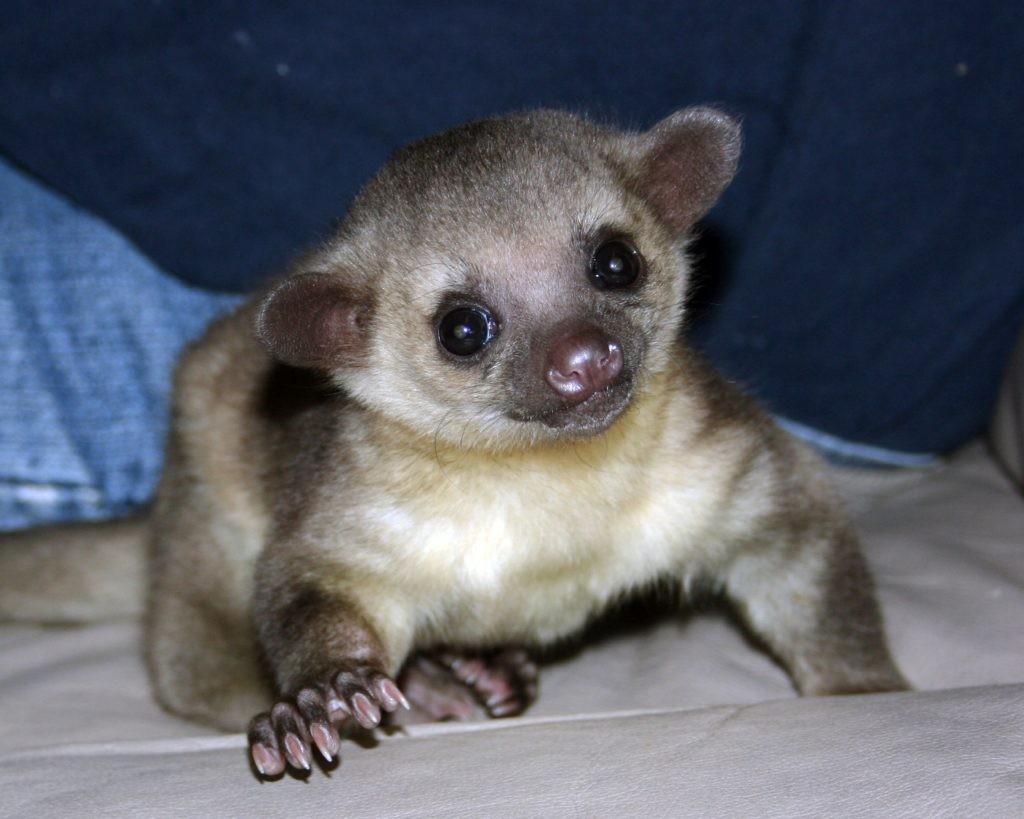
Description
Introduction to Kinkajous
Kinkajous, scientifically known as Potos flavus, are fascinating creatures native to the tropical regions of Central and South America. They belong to the family Procyonidae, which includes raccoons, olingos, and coatis. Kinkajous are often referred to by alternative names such as “honey bears,” “night apes,” and “night walkers” due to their nocturnal habits and fondness for honey. This guide will delve into the origin, species, characteristics, geographical distribution, laws, and requirements for owning kinkajous as pets. We have both male and female Kinkajou For Sale
Origin and Species
Kinkajous are part of the Procyonidae family, which is a diverse group of mammals. Their closest relatives are the olingos (Bassaricyon spp.), with which they share many physical and behavioral traits. Kinkajous are not bears, despite being called “honey bears,” but rather are more closely related to raccoons. They are primarily solitary animals, only coming together during mating season.
Alternative Names
-
Honey Bears: This name is due to their fondness for honey and their ability to extract it from beehives using their long, extrudable tongues.
-
Night Apes: This name is misleading, as kinkajous are not apes but rather members of the Procyonidae family. It likely refers to their nocturnal habits and agile climbing abilities.
-
N
-
Night Walkers: This name highlights their nocturnal lifestyle and their ability to move quietly through the forest canopy.
Characteristics
Kinkajous are characterized by several distinctive features:
-
Size: Kinkajous are small to medium-sized mammals, typically weighing between 3 to 10 pounds and measuring around 16 to 24 inches long, excluding their tail.
-
Tail: They have a long, prehensile tail, which they use as an extra limb to grasp branches and navigate through trees. Their tail is one of their most distinguishing features.
-
Coat: Kinkajous have thick, soft fur that can range in color from golden-yellow to brown. Their fur helps them blend in with the trees and provides warmth.
-
Diet: They are primarily frugivores, meaning their diet consists mainly of fruit, particularly figs. They are also known to eat nectar, insects, and small animals.
-
Nocturnal: Kinkajous are nocturnal, meaning they are most active during the night. They have excellent night vision and are well-adapted for their nighttime lifestyle.
-
Behavior: They are arboreal, spending most of their time in trees. Kinkajous are agile and can leap from branch to branch with ease. They are also known for being playful and curious.
-
Social Structure: Kinkajous can be solitary or live in small groups, and they communicate through vocalizations and scent markings. They are generally not territorial.
-
Lifespan: In the wild, Kinkajous can live up to 20 years, but in captivity, they might live slightly longer due to better care.
-
Habitat: Kinkajous are native to the rainforests of Central and South America, where they reside in the canopy of trees.
-
Conservation Status: Kinkajous are not currently endangered, but their habitats are under threat due to deforestation. They are considered a species of “Least Concern” by the International Union for Conservation of Nature (IUCN).
-